The Old West has captivated the imaginations of Americans for more than 100 years, and I am no exception. I often seek adventures that in some way recreate that epic, albeit overly romanticized period and all the promise it held. My latest horseback riding trip leads to the surprise discovery that Argentina’s Patagonia region is the new Old West.
The southern part of South America looks a lot like the American West, minus the native bamboo plants that flourish down here. The biggest difference is that the developers haven’t descended upon Argentina’s Patagonia region…yet. But there are signs they’re on their way. How that plays out remains to be seen.
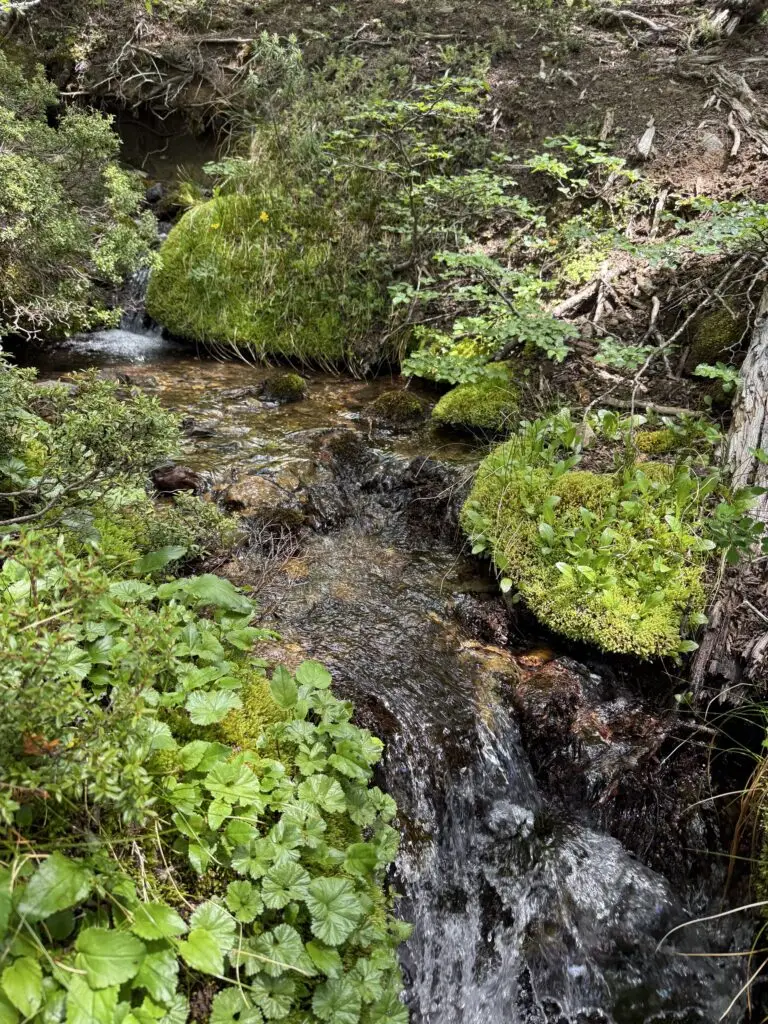
For now, riding horseback through these majestic mountains, breathing in the clean air, drinking straight out of crystal-clear streams, are gifts to treasure. I am forever grateful for the opportunity to experience this stunning landscape in its natural state. I’m equally grateful to Cabalgatas Lago Puelo for making this experience possible for visitors like me. Their expert guidance and welcoming hospitality make this trip one I will never forget. I have the time of my life.
There is a saying that if you want to hear God laugh, tell him your plans. I know his laugh well and know now to just get out of his way. I go where I feel called and allow things to unfold as they will.
Such is the case for my trip to Argentina. I find a trip via Book-Horse-Riding-Holidays that is six days/five nights, with two nights camping up in the Andes of Argentina’s Patagonia region. Cabalgatas Lago Puelo is run by a husband-and-wife team who live and run their business near Lago Puelo National Park. Perfect.
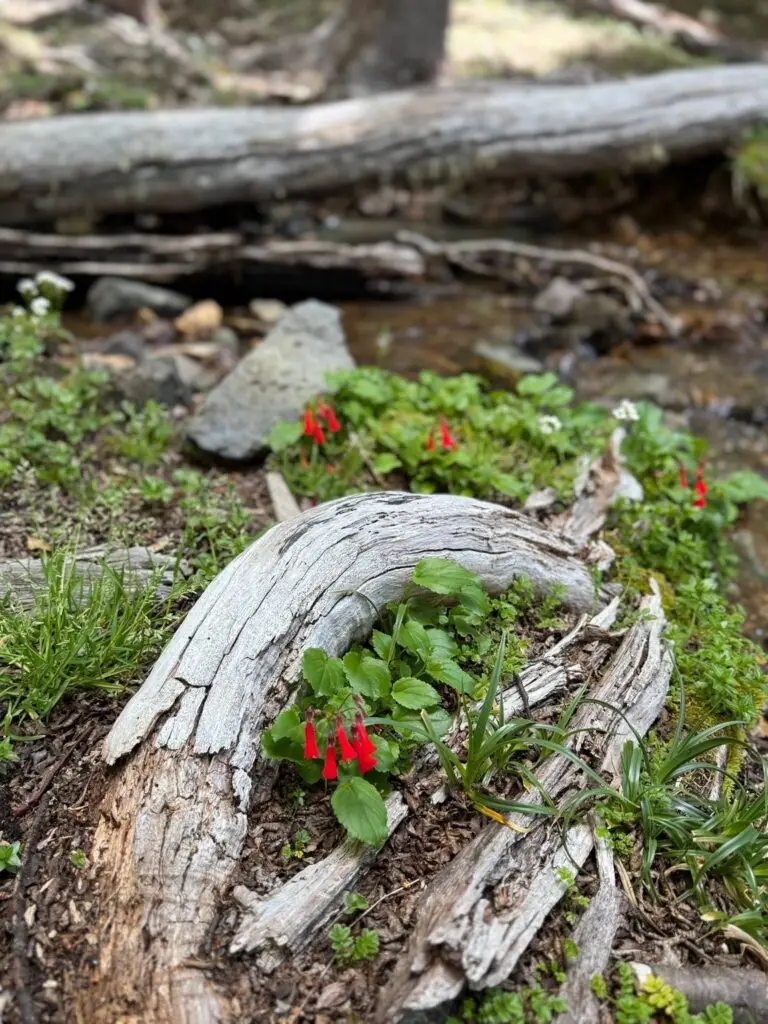
After a lot of correspondence with Liza, I book my trip for the week of Thanksgiving. This is the shoulder season down here, late spring, right before all the tourists converge upon Argentina’s Patagonia region for the summer. It’s perfect as it’s not too hot, not too crowded, and everything is in bloom.
"This is the shoulder season down here, late spring...perfect as it's not too hot, not too crowded, and everything is in bloom."
To get to Lago Puelo, I have to fly to Bariloche, so I decide to spend some days there before my adventure and a few days in Buenos Aires afterward. As this is my first truly solo international trip, I make the arrangements myself with some help from a travel agency.
The drive from Bariloche to Lago Puelo is winding and beautiful. It takes about two hours and runs through neighboring El Bolson. Both towns are situated in a river valley surrounded by mountains. The road is lined with rustic lodges and bears resemblance to driving through the Catskills and Poconos of upstate New York.
Liza picks me up at the bus station, where my driver drops me off. I am supposed to take the bus, but I have too much luggage. It works out for the best because I really enjoy the car drive and getting to see everything from the front seat.
Liza and her husband Ivan are the owners of Cabalgatas Lago Puelo. They are a lovely couple who grew up together in this valley before spreading their wings and living abroad for several years. Family and the pull of this beautiful place bring them back here to raise their own family and start their own businesses.
Liza is an amazing cook, whose culinary wonders are a highlight of the week. She says I’m not the first to tell her she needs to make a cookbook and that she may someday. Here’s hoping she does. She is also a very talented potter and uses her stoneware for the beautiful table she sets for their guests.
Ivan is the horseman. He has a stable of 16 horses, some of which he uses for rides into the national park. Others, he uses for the rides he and his team lead guests on, both in and around the national park and on overnight camping trips up into the mountains. Ivan breeds the stock himself. They are a cross between quarter-horse and criollo, a hardy breed descending from Spain. The horses are obviously very well cared for and very well behaved.
At lunch, I meet the other guest, a Dutchman living in Switzerland we all call Marco. Marco is an experienced horseman who makes the journey to Argentina’s Patagonia to also enjoy the wonder of this beautiful place.
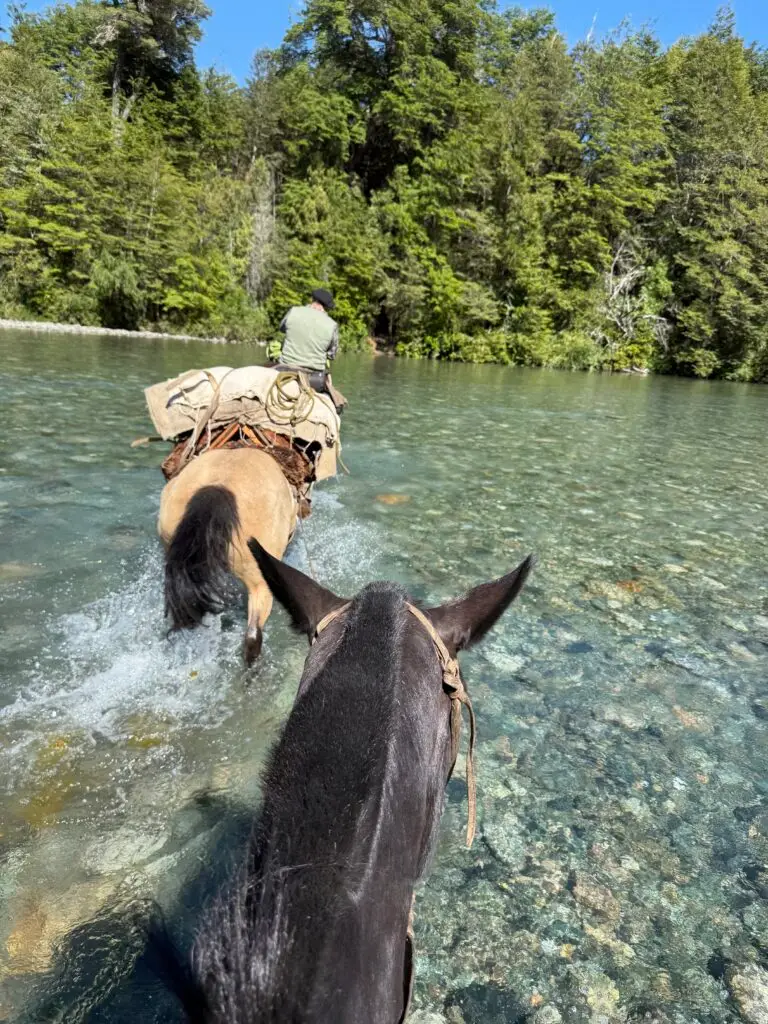
After lunch, Ivan takes Marco and me on a ride into Lago Puelo National Park, and we all get acquainted. A river crossing brings to mind Taylor Sheridan’s “Yellowstone” prequel, “1883,” and all the hardships the pioneers endure enroute to the American Old West. It’s no surprise to learn that the series is a favorite of Ivan’s.
"This place is magical, and I can't believe I'm here! It's going to be such a great week!"
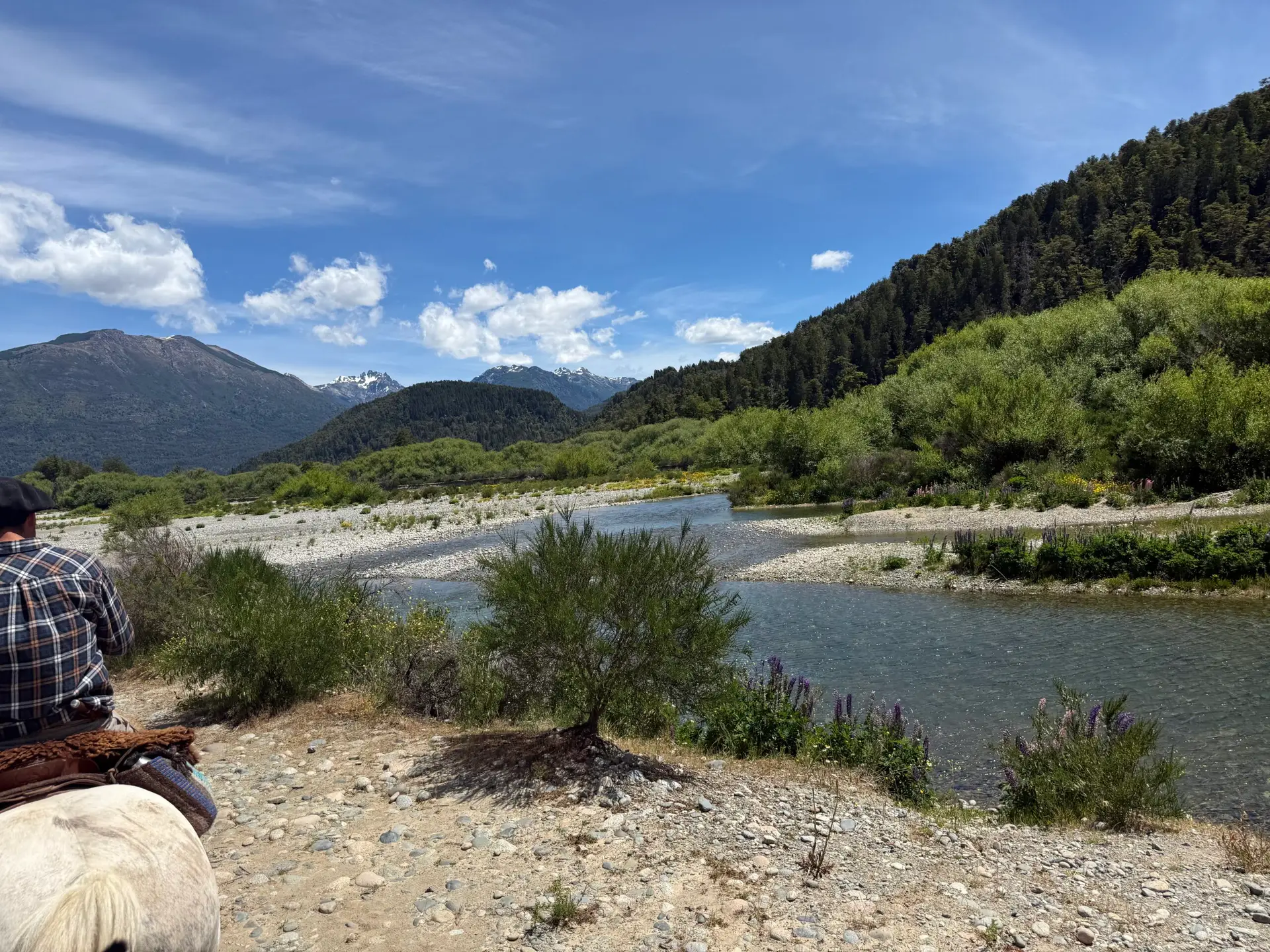
The river is crystal clear, revealing all the different colors of rocks at the bottom. It comes up to about the horses’ bellies and while moving swiftly, it’s not rushing.
As we ride through the woods, I swear I hear the laughter of many people, like a lively party is going on just beyond the river banks. Then I realize it’s just the trees singing. This place is magical, and I can’t believe I’m here! It’s going to be such a great week!
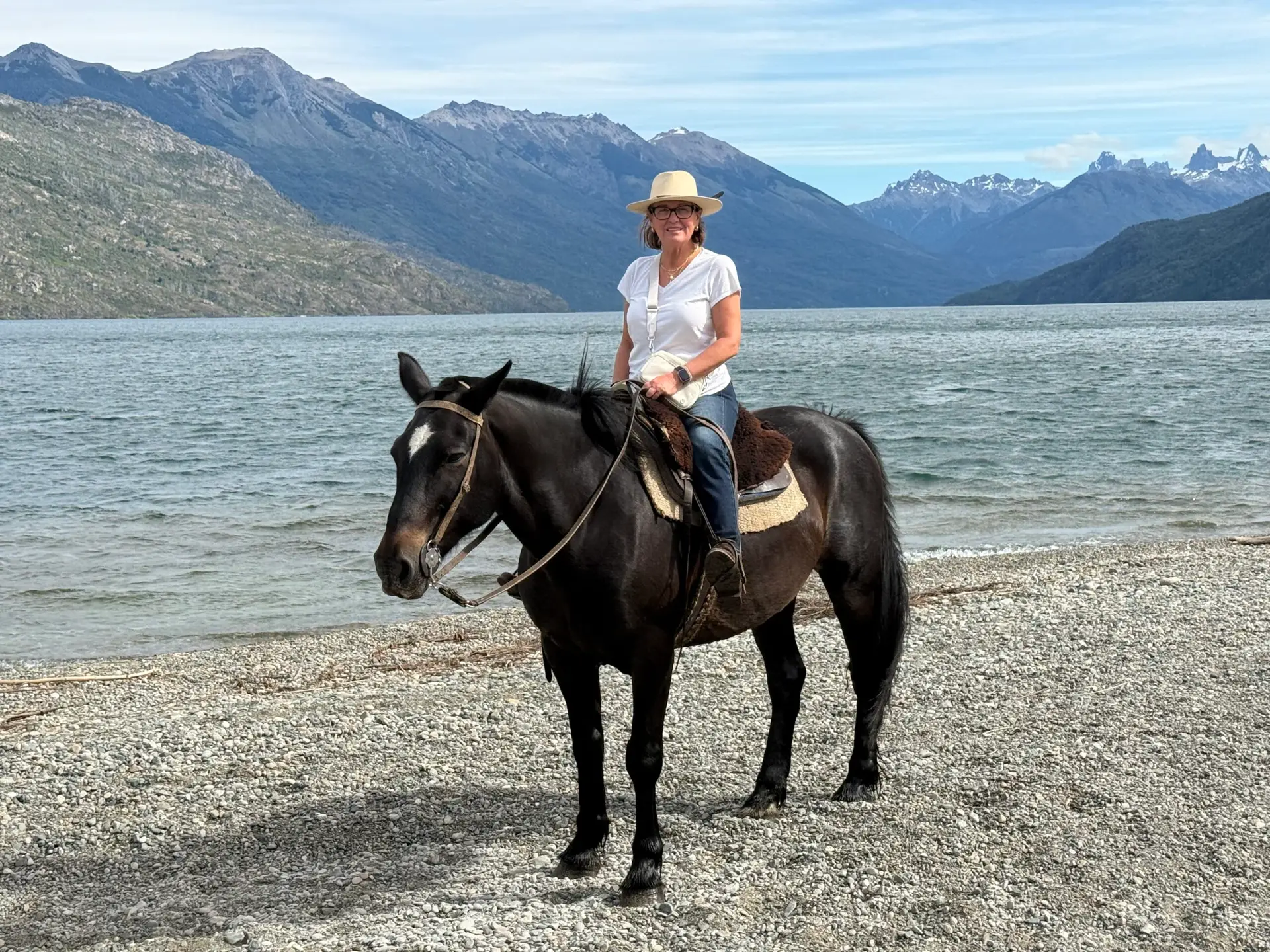
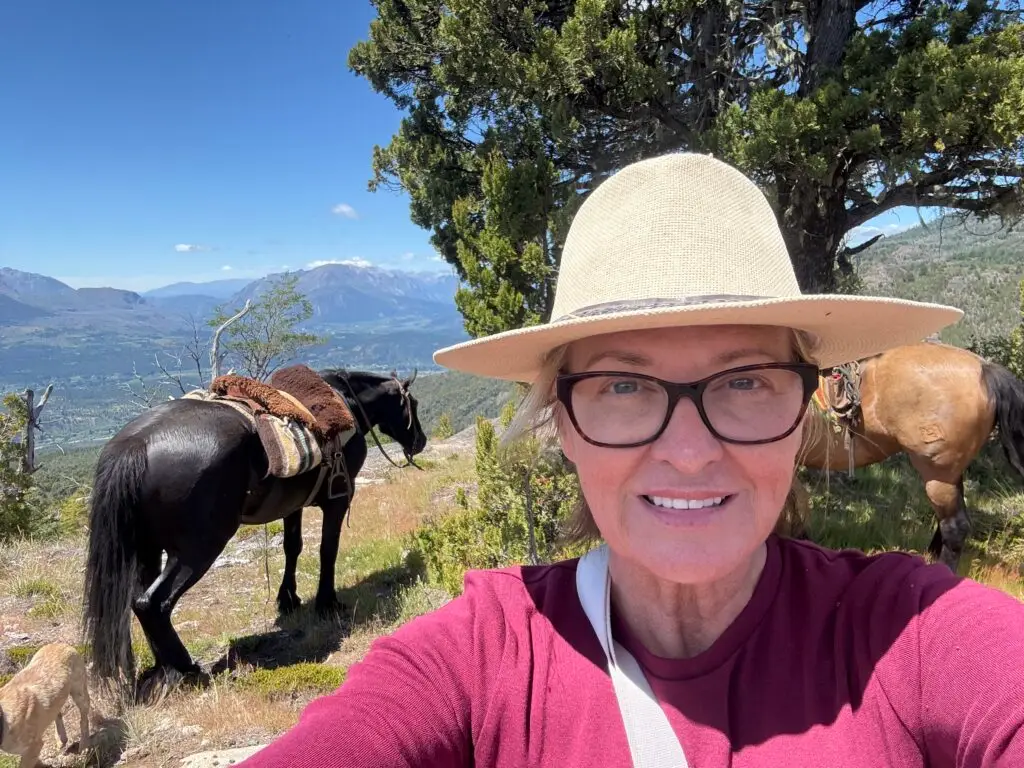
I’m riding a very large black horse with a white star on his forehead named Lucero, which means “Morning Star.” He’s so tall I can’t get on him by myself. Compared to my old horse, who by quarter-horse standards was pretty big, Lucero feels like riding a Clydesdale! His feet are huge. He’s wide and very sturdy. I can see how he is very well suited for this terrain, and I feel very safe on his back. He’s a very good boy.
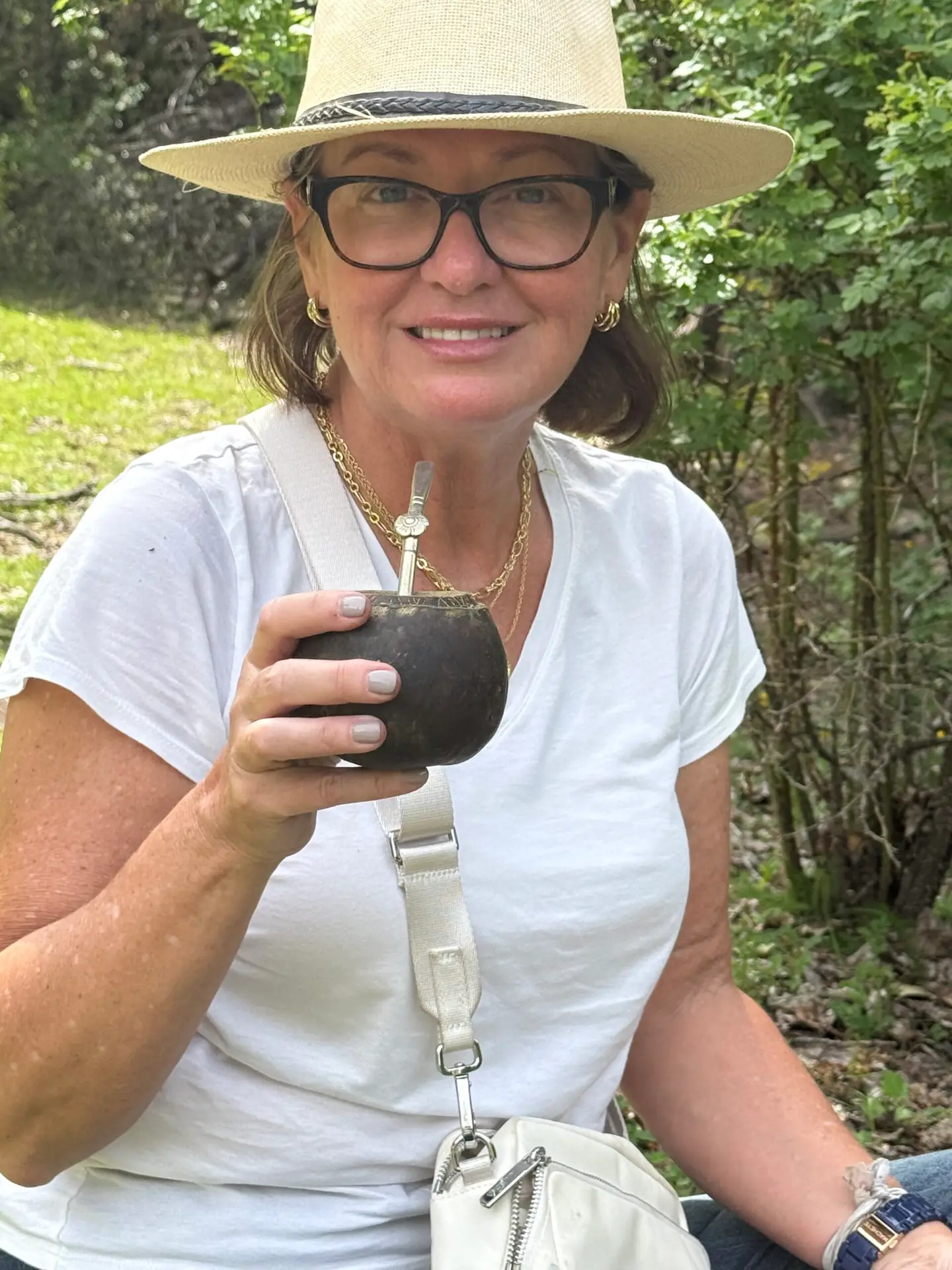
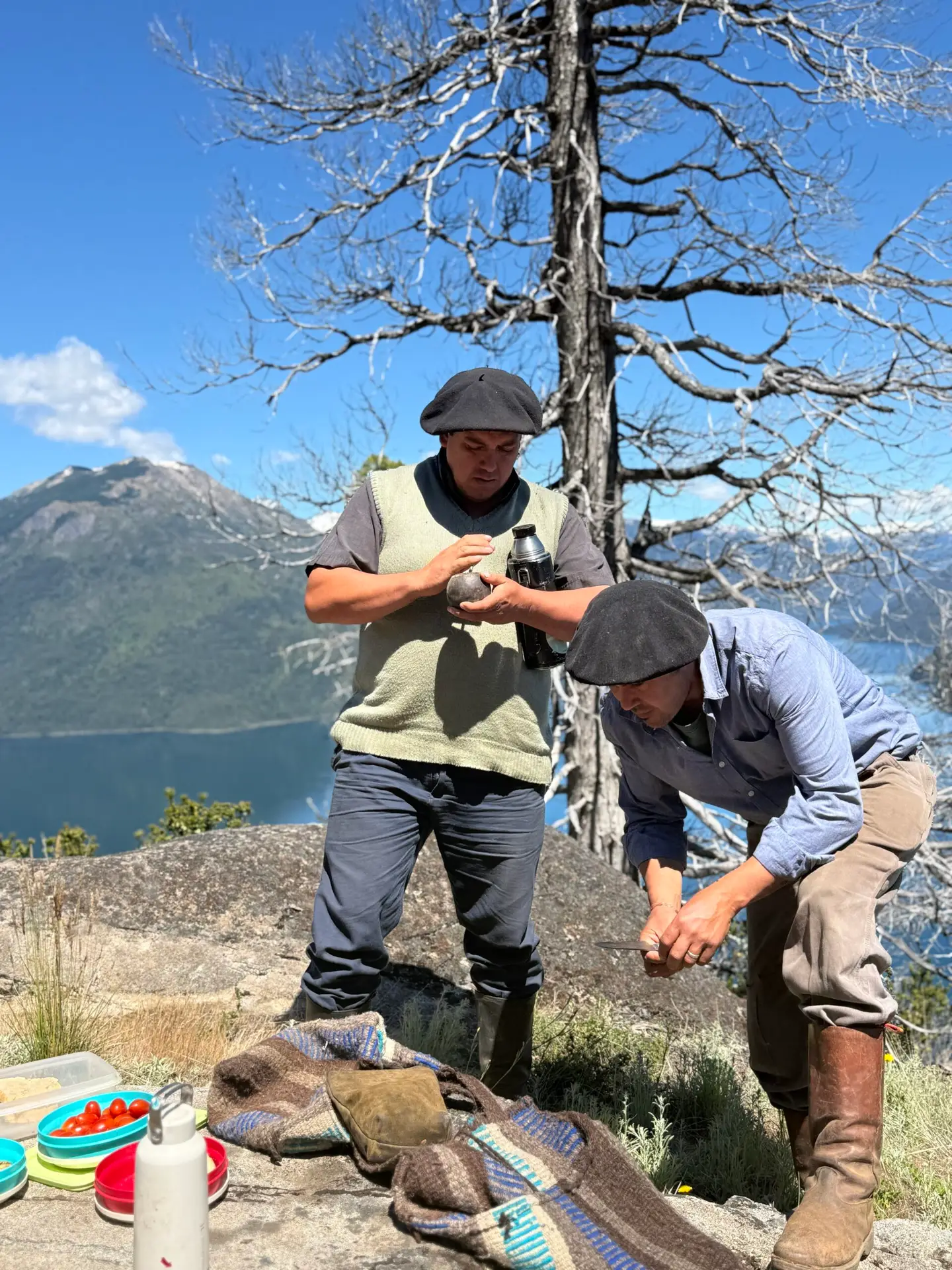
Mate is prepared in a special vessel, unique to the tradition of sharing Mate. A protective outer layer of leather houses a dried, carved-out gourd. An infusion of dried yerba leaves and hot water, never boiling, is taken in through a metal straw called a bombilla.
The preparer passes the drink from person to person. Once you’re finished, it is customary to hand the gourd back to the preparer. They then offer it to someone else. Saying “thank you” when returning the gourd indicates you are finished.
Yerba is a legal botanical herb that has stimulating effects similar to drinking coffee or tea due to its caffeine concentration. The Mate Ivan shares with us is a nice bonding moment for three people who are going to climb a mountain together on horseback. I feel privileged to have this tradition shared with me.
The next day, Ivan takes us in the other direction from the park and up into the mountains. The road to get there is dirt and gravel, and the houses along the way are a patchwork of different styles. They all share a welcoming, lived-in coziness.
The neighborhood reminds me of of what rural towns in the US looked like before planned communities overran the landscape. Several neighbors wave to us along the way. With the mountains, lakes and rivers, the park, and the close-knit community vibe this place holds, it’s easy to see why Ivan and Liza decided to come back home.
Further down the road though, signs of development begin to emerge. We all sigh and lament that in twenty years, this place will look nothing like it does today.
I feel like I’ve seen this movie before.
"The land and water are still pristine. Wildlife flourishes with plenty of room to roam. The sky is free of pollutants. There is no random trash lying about."
On this day though, the land and water are still pristine. Wildlife flourishes with plenty of room to roam. The sky is free of pollutants. There is no random trash lying about. The few people who today call this area home are conscientious stewards of the beauty that surrounds them. They know what they have here, and they take care of it.
As we head up the mountain, the only evidence that people have ever been here before, besides the trail, is a carving on a tree exclaiming, “Vamos Messi!” The famed and beloved Argentinian futbol player is revered everywhere in this country, even the mountain forests.
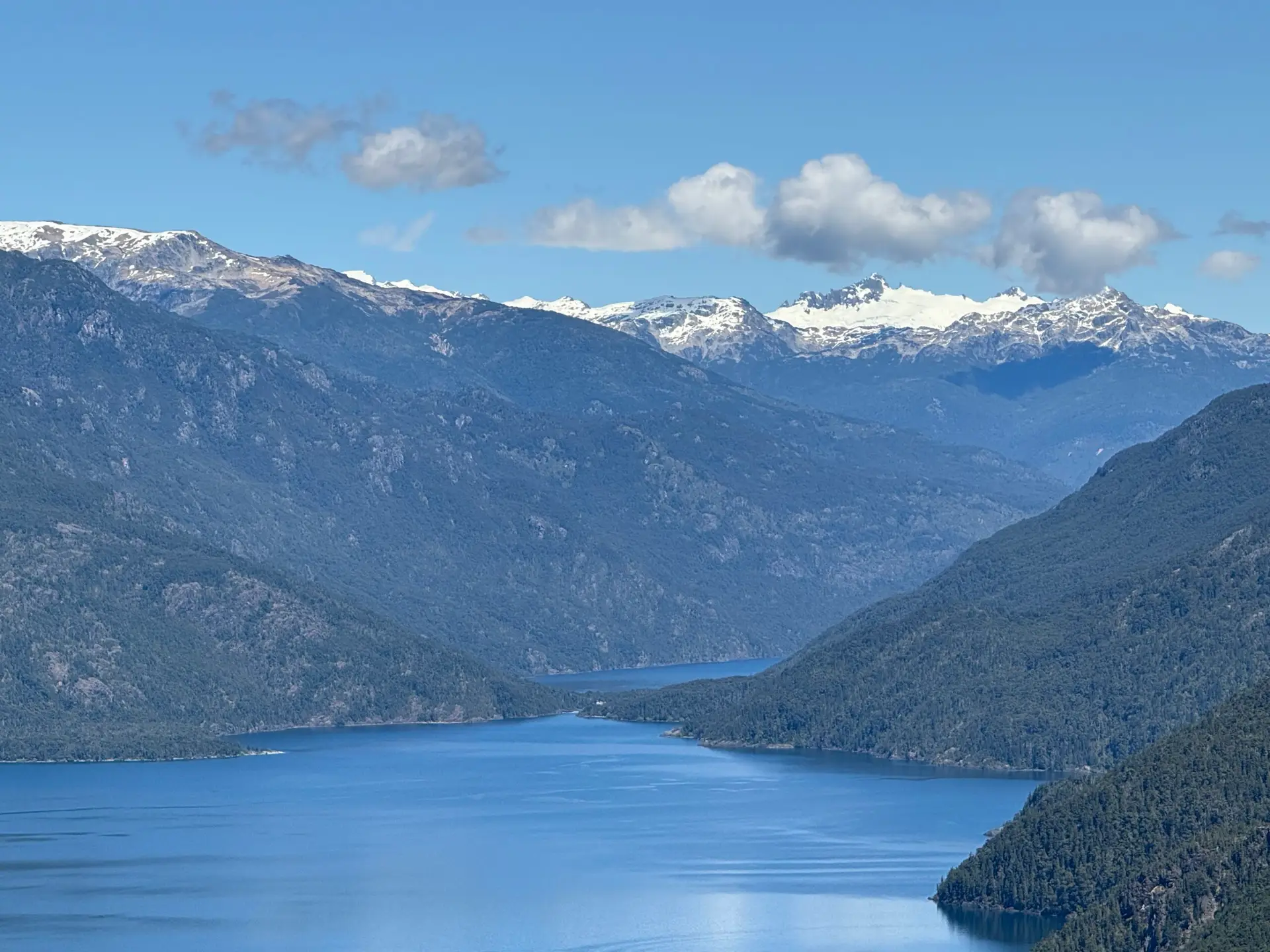
"In the distance, just beyond Lago Puelo, lies a smaller lake and another mountain range...the bridge of land between the lakes is the Chilean border"
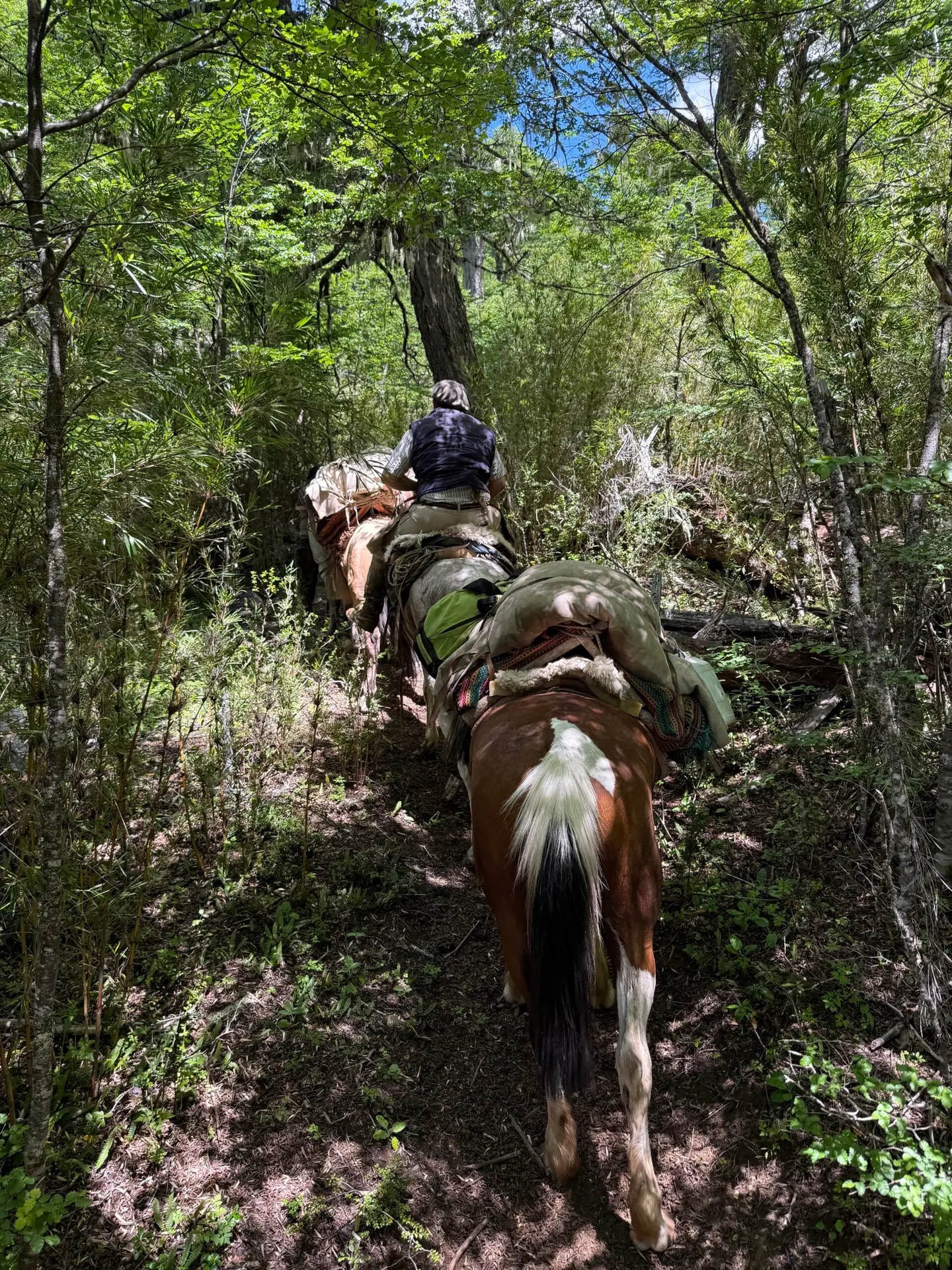
A switchback trail takes us through forests so lush that parts of it have to be recut for passage. Other parts stand as stark reminders of the devastation one spark of flame can do to a wide swath of forest. In both instances, the trees dwarf us, making the sky barely visible.
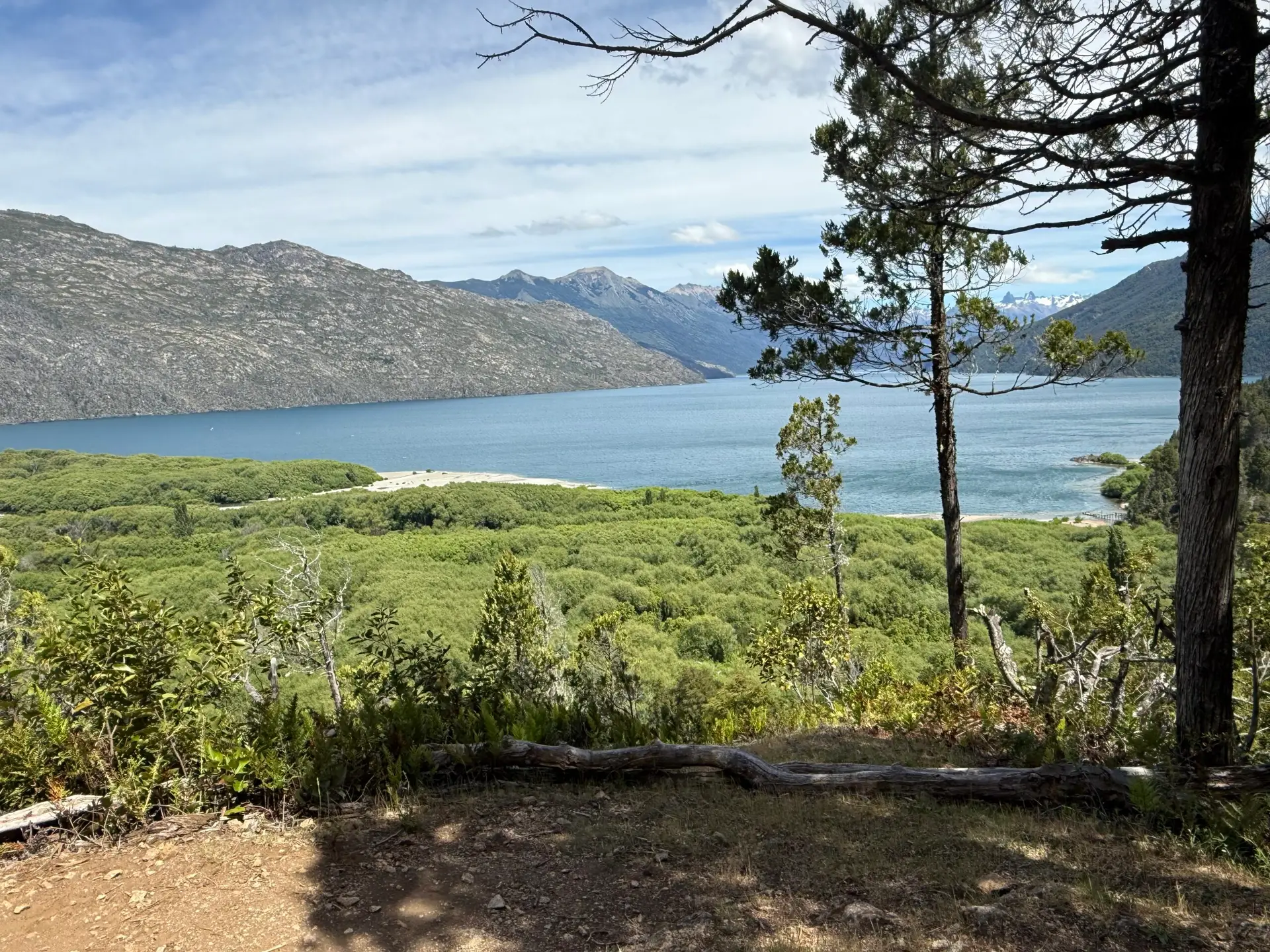
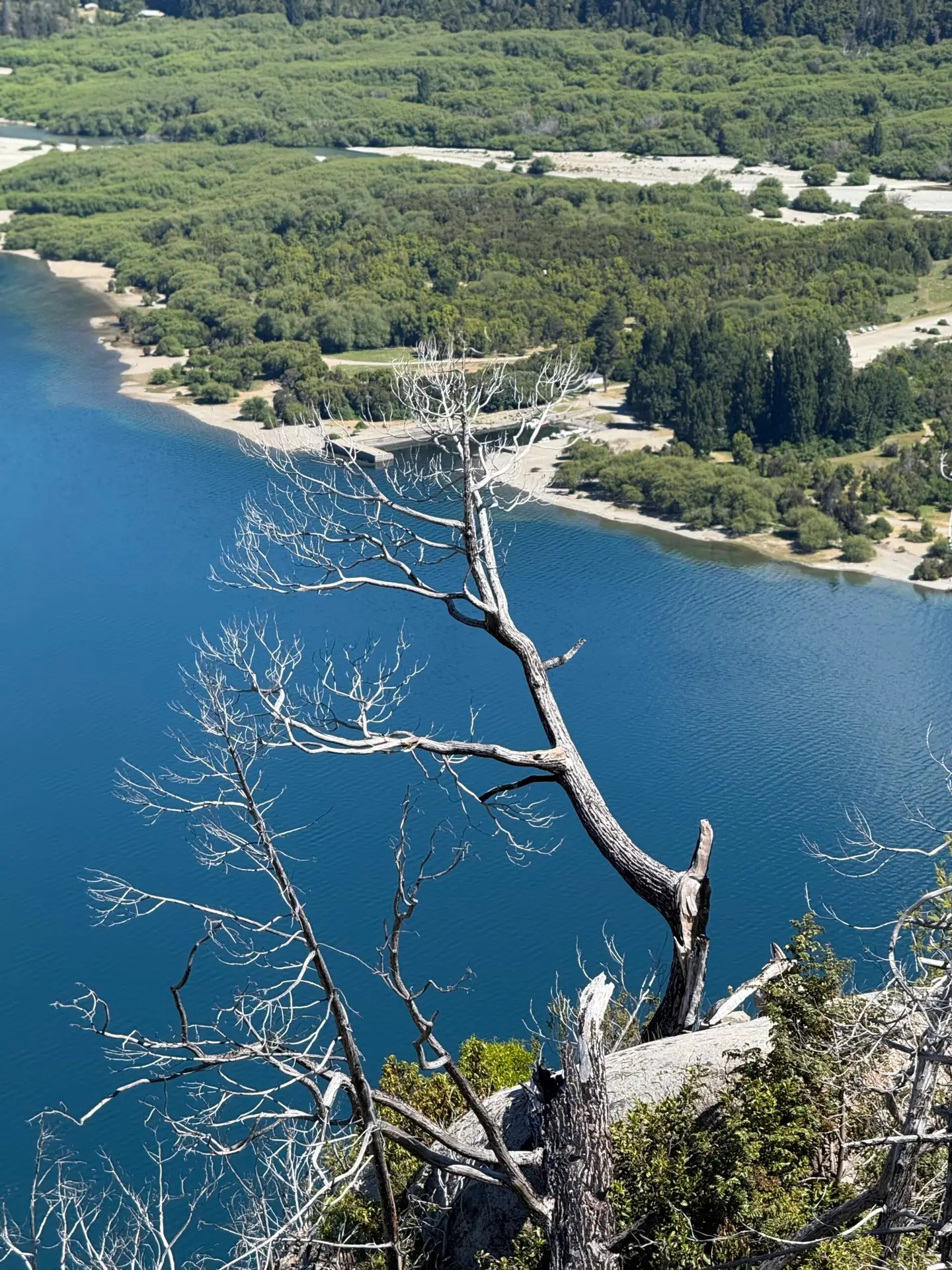
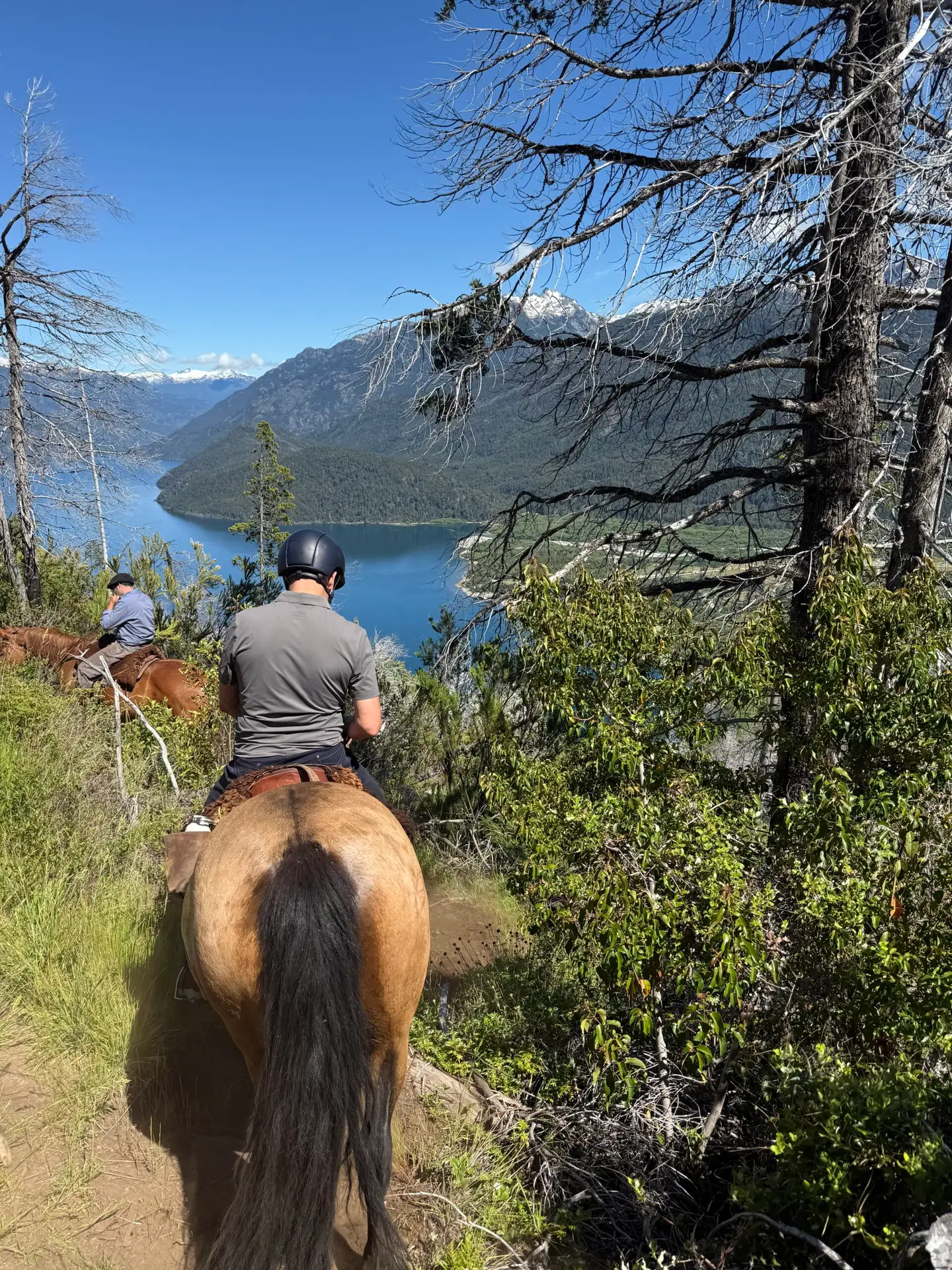
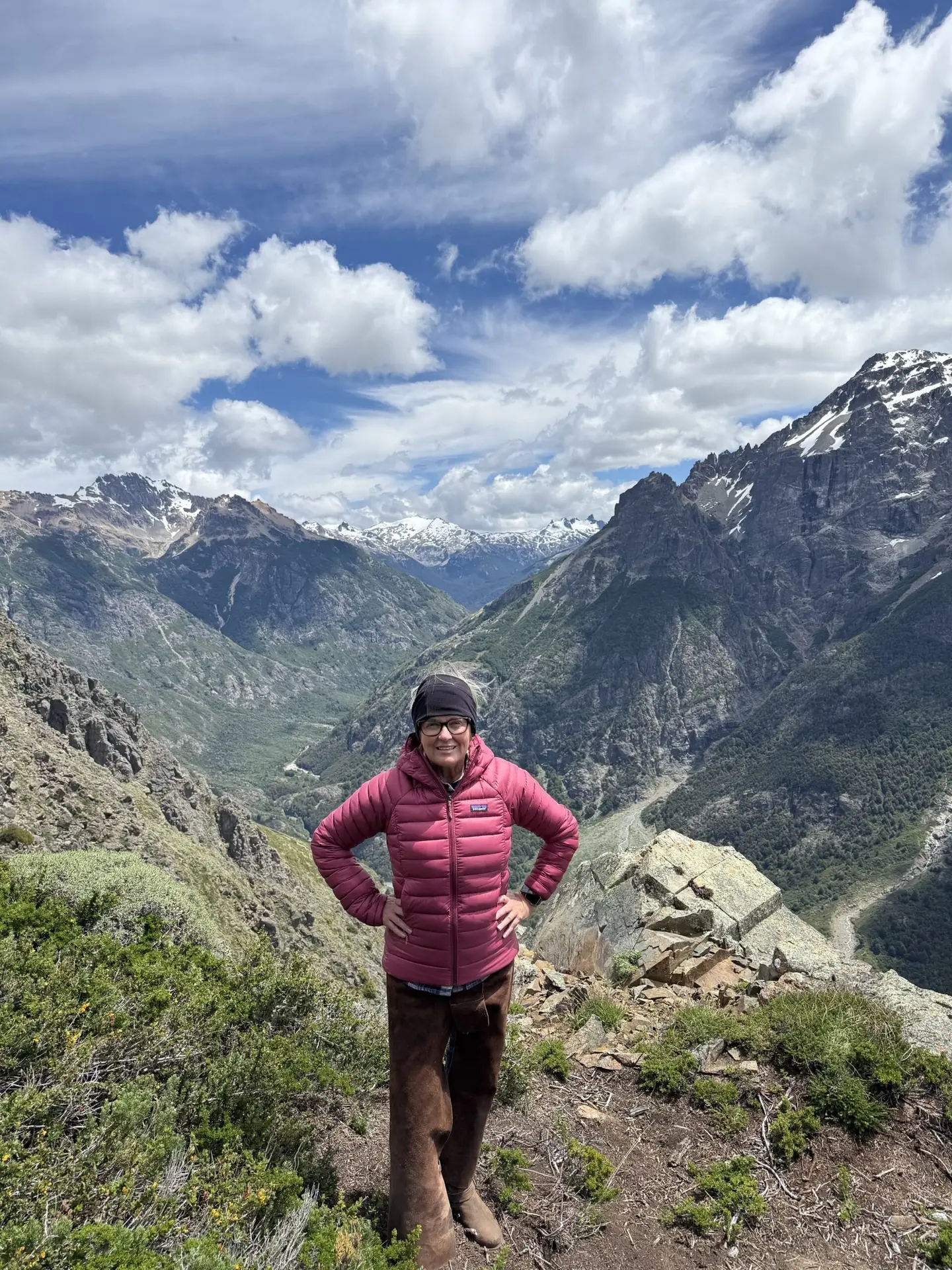
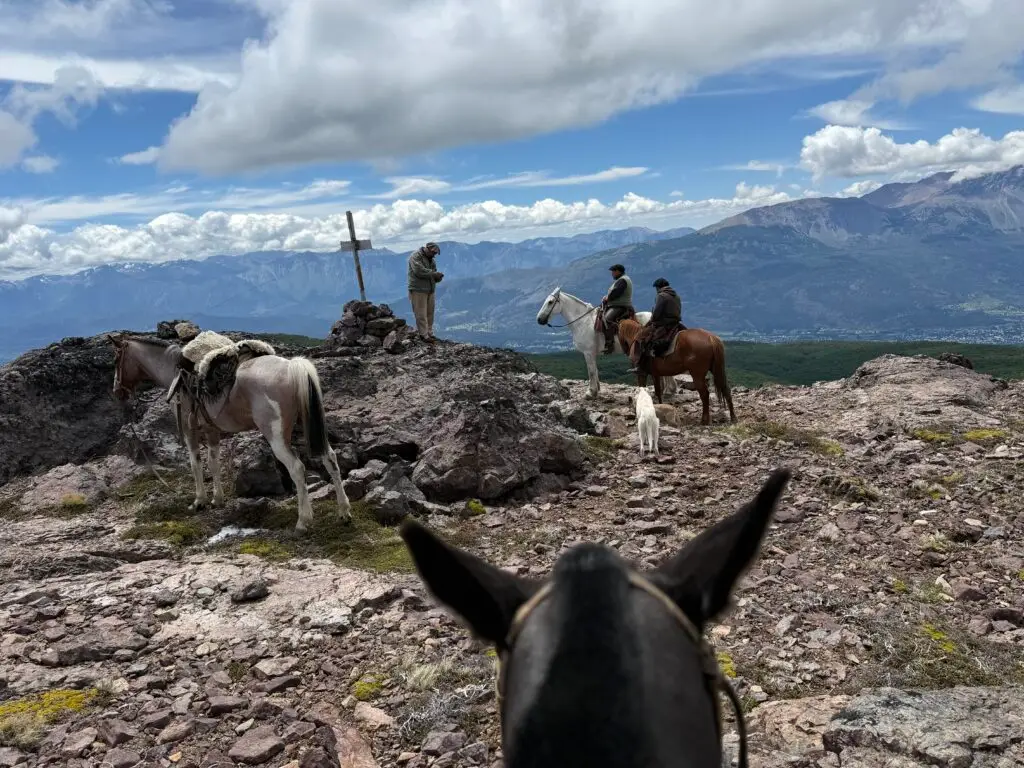
We emerge from the forest and make our way along a ridge, enjoying the breathtaking views of Lago Puelo, the lake and valley below. It’s a beautiful blue-sky day. In the distance, just beyond Lago Puelo, lies a smaller lake and another mountain range. Ivan tells us that the bridge of land between the lakes is the Chilean border. We’re about 20 miles away, give or take.
We make it to the Lago Puelo overlook and all stare in amazement. The view is what they call picture perfect. The irony is that pictures can’t begin to do it justice.
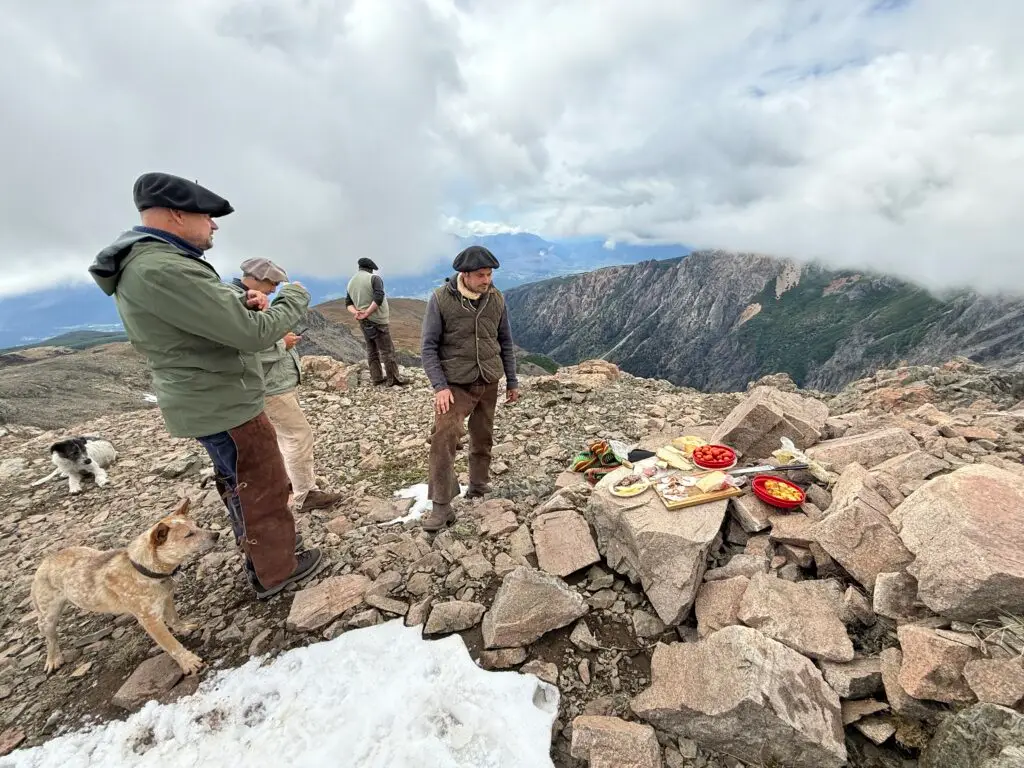
Ivan and Javier, who joins us today, get out the spread Liza packs for us. We all enjoy lunch and Mate and bask in the warm sun and the divine beauty of this place.
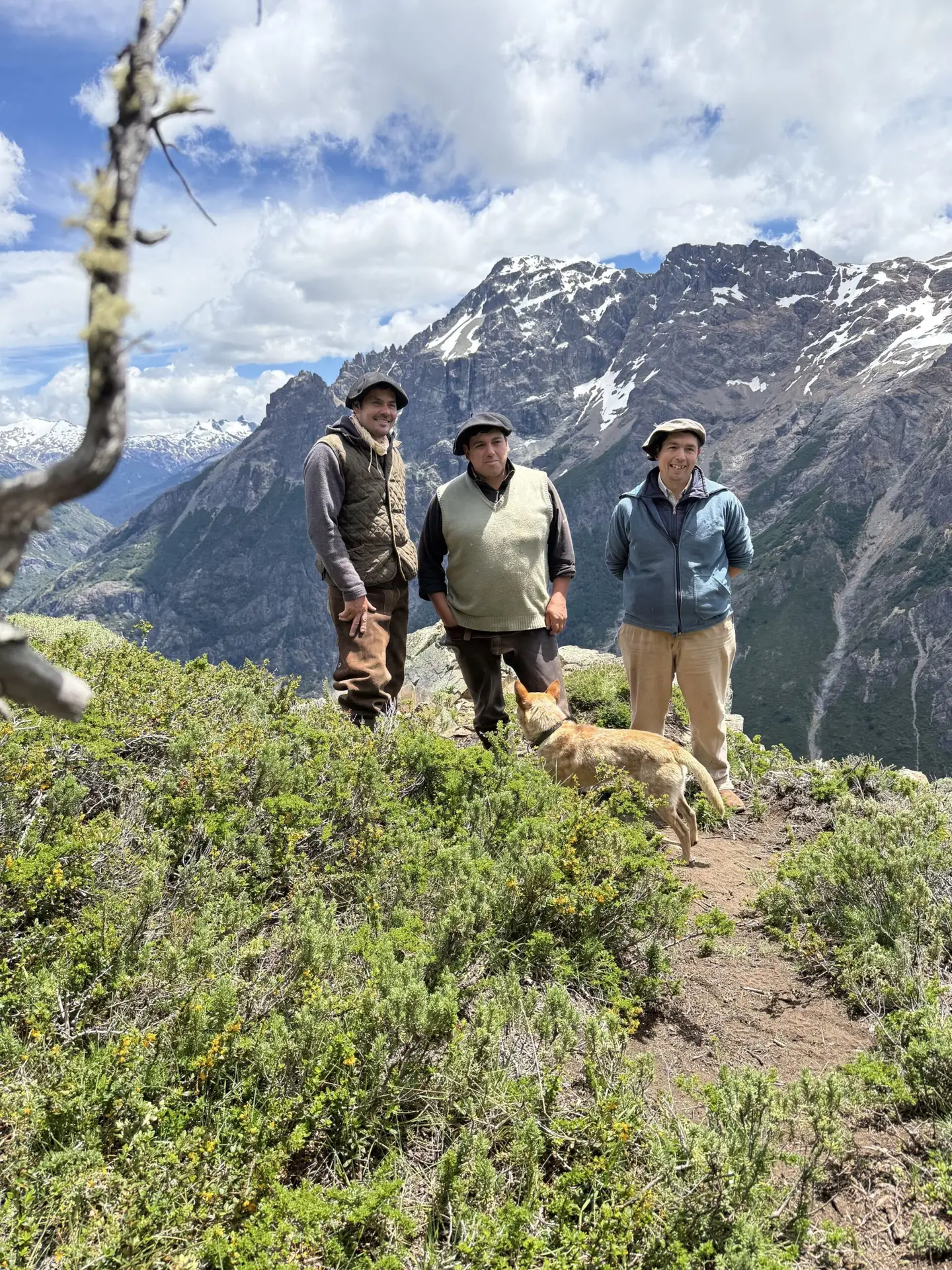
It’s the third day and we prepare to embark on our three-day/two-night camping trip in the mountains. Often times, Liza goes on these trips but she has other commitments that keep her behind. This makes me the only woman going on the camping trip with four men I just met (Ivan, Javier, Daniel, and Marco).
It’s a total non-issue. We don’t even discuss it. It’s really nice not being singled out for being the only woman. Coming from a life where it’s sometimes difficult to be a woman in a man’s world, this is refreshing.
They don’t really treat me as one of the guys, in fact they are fairly protective but careful not to make me feel small. They just let me be who I am, and they are who they are, and we are all very respectful of each other and we get along splendidly.
We start heading up the mountain that overlooks El Bolson. It has been in one of the guide’s family for generations. It’s designated as a reserve so no one else ever goes up there. He keeps some cows and has a camp there that will be our basecamp.
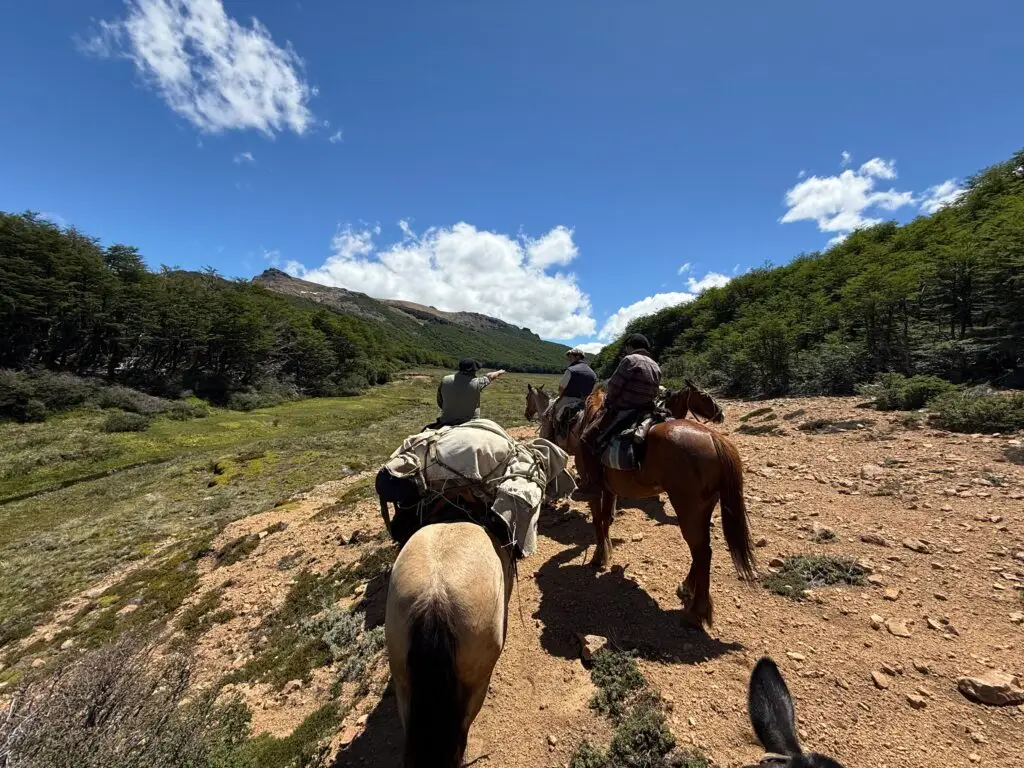
The ride up is beautiful, but far from easy. Nothing worth doing is ever easy. This is rugged terrain. The trail is often narrow, with steep inclines. The horses have to navigate stones and rocks and at times, walk near ledges with steep falloffs. They know exactly where to put their feet and how to steady themselves.
Two of the horses are carrying large packs on their backs with all our gear and provisions for the trip, hence the term packhorse. Each one is being led by either Javier or Daniel. Occasionally, we have to stop because one of the packhorses’ loads is too wide to make it through two trees. But other than that, the trip up is uneventful.
I have so much confidence in Lucero that I spend a lot of the ride taking photos and videos. Marco does the same. Ivan has a great time getting video with my GoPro.
We stop along the way at an overlook and have lunch. Down below, we can see where we started, as well as all of the El Bolson valley. The Lago Puelo valley now hides behind a mountain range, a dog leg to the right.
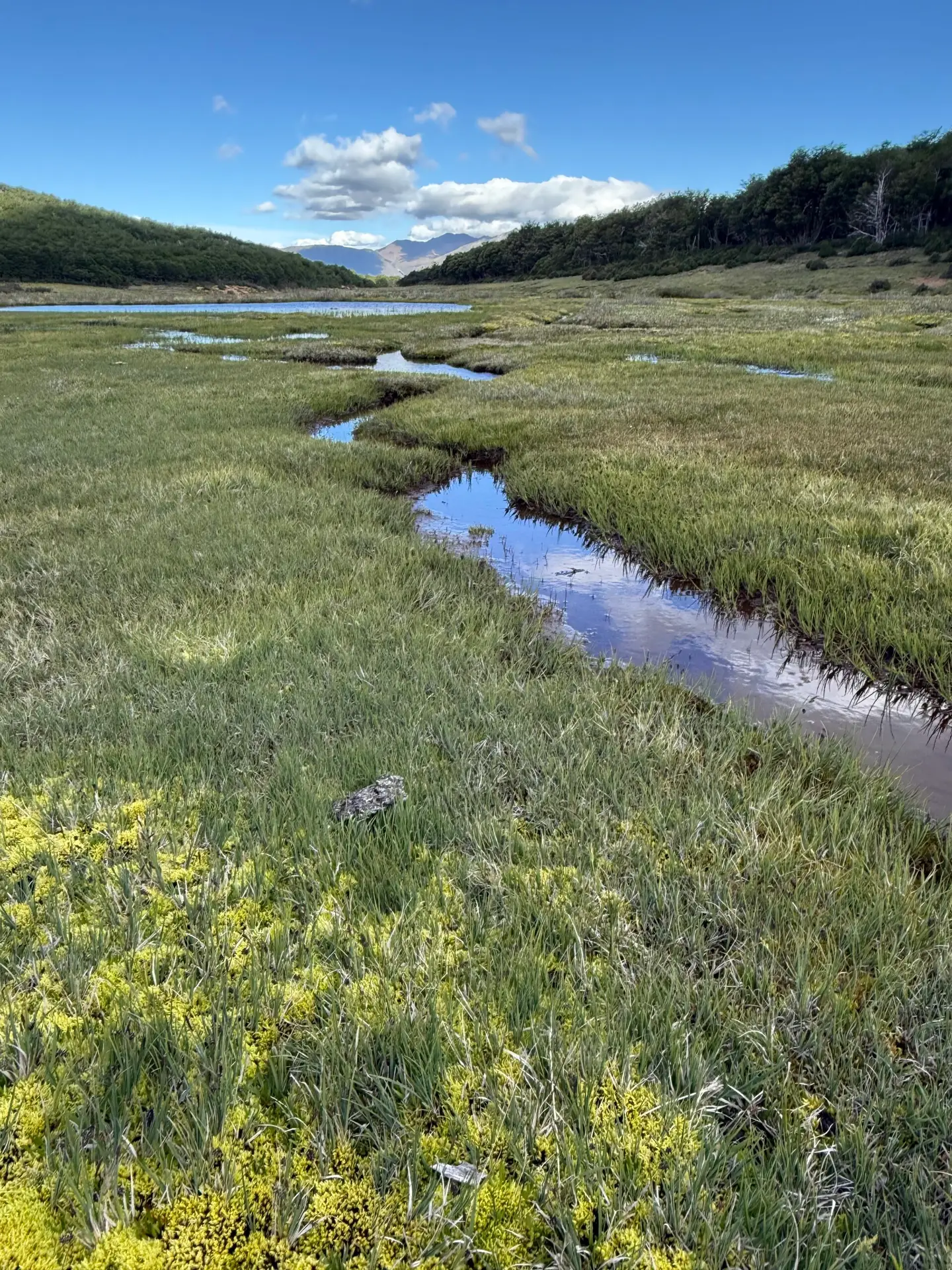
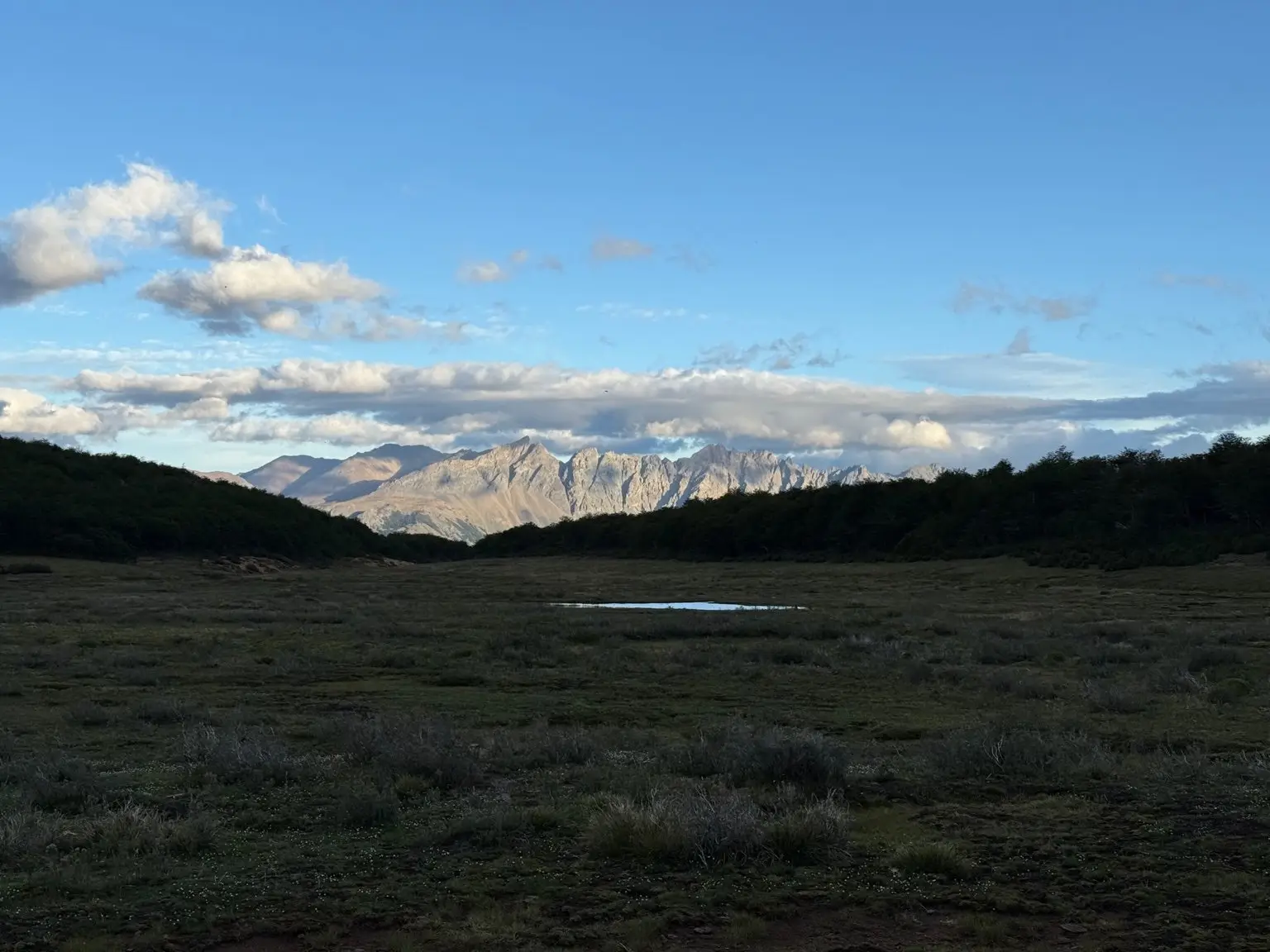
Finally, after about four or five hours, we emerge from the forest. We’re greeted by a flat green field throughout which a creek and several streams have cut their way. We reach the top of this mountain and head toward camp, which the guides point out in the distance.
The trail we take is not the only way up here. I’m told there’s one that is steeper, and others that access different camps. I’m reminded of the lyrics to a Little River Band song about how there is more than one way up a mountain, “but the view from the top is the same.”
And what a view it is!
"Argentina's Patagonia Region is the new Old West!"
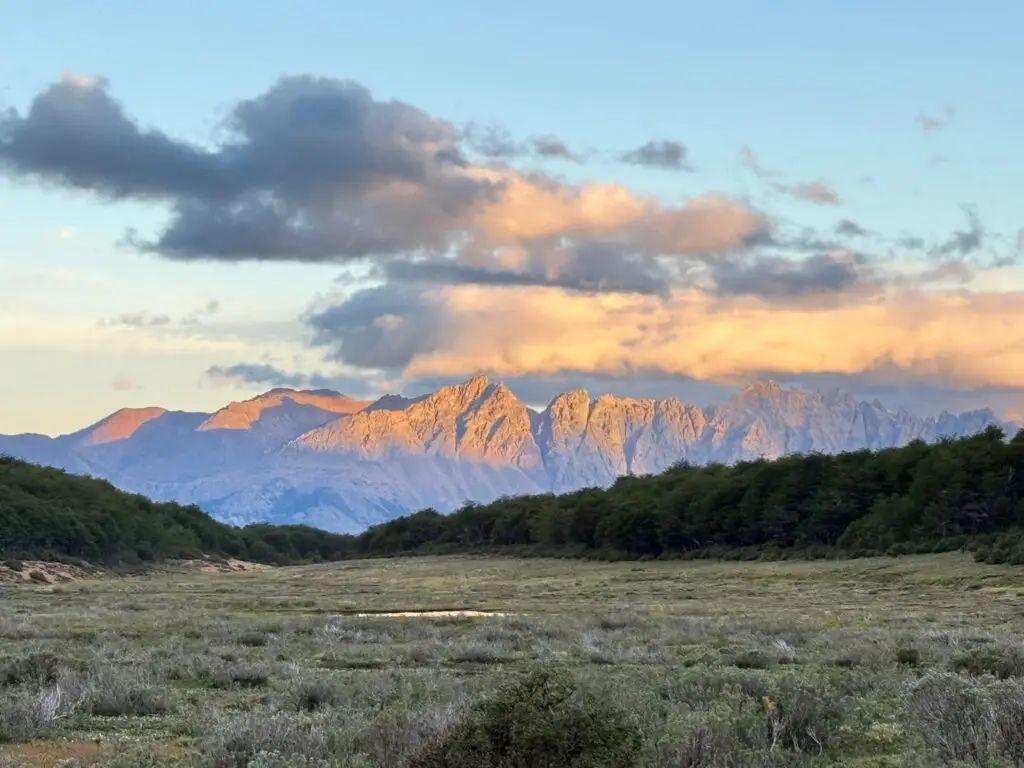
It’s sunny and warm and I’m somewhat surprised at how much these mountains look and feel like the American West. I keep thinking about the pioneers and their journeys and how it must have looked a lot like this. This is especially true when we come upon the camp. It would have been the perfect place to stake a claim. Argentina’s Patagonia region is the new Old West!
I realize it’s very American of me to look at the Argentinian Andes through an American lens but that’s my frame of reference.
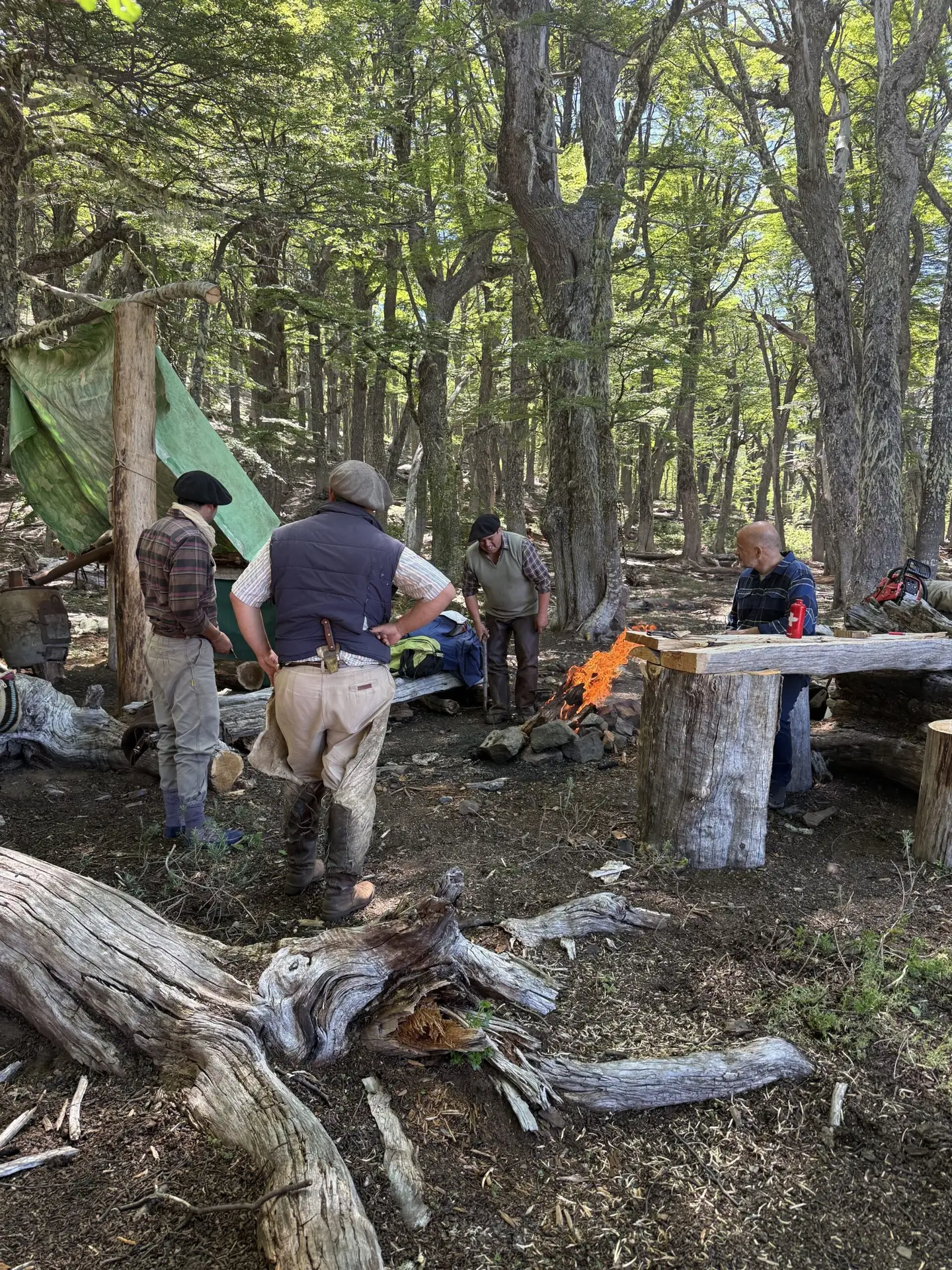
The men unpack the horses and start setting up camp right away. Marco and I get our own tents, while Ivan and the guides all sleep in a makeshift shelter they have up there. I think of the show “Gilligan’s Island” and its theme song, “No phone, no lights, no motor cars, not a single luxury. Like Robinson Caruso, it’s primitive as can be.”
That’s us! Primitive as can be! Yet we have everything we need.
Going off the grid is a bit of an adjustment. I wonder what in the world are we going to do up here for two more days? Then I start to explore and am in awe of all the untouched nature around me. And I discover things I might otherwise miss because of distractions like…my cell phone.
Ivan hands me my water bottle and says it’s full of fresh water straight out of the spring. I have flashbacks to drinking out of a creek at summer camp – that water looked clean and clear. Ivan assures me that this water is fine, just like eating snow. It’s all running down from the glaciers higher up in the mountains.
Oh, my Jesus, this is the best tasting water in the world! It is indescribable. If only it could be bottled…I mean, for real, not that swill packaged as mountain spring water we buy in bulk back home.
After dinner, Javier and Daniel engage in lively banter. Neither speaks English but I can discern they are talking about dogs and pigs. Ivan explains that there are wild pigs up in these mountains – not boar, which can be dangerous. The guides like to hunt the pigs with their dogs. It gets a little gruesome but once the dogs catch the pigs, the men stab the pigs.
This is perplexing to me and I ask why they don’t just shoot the pigs. Everyone kind of pauses and looks at me like I have two heads. Ivan explains that it is really difficult to get guns down here, even for hunting. There just really are no guns here.
Being from the US, and the Midwest, no less, where it’s perfectly legal to walk around with a concealed gun, I am accustom to more people having guns than not. I’m somewhat blown away by the fact that we are up here on this mountain without even one single gun. I ponder this for a moment, and I imagine they are all ruminating on my questioning as well.
"And this is a big part of the beauty of traveling far away from life as you know it. Different perspectives, different ways of doing things, different realities, and the list goes on. It's always enlightening."
These are the types of situations that really make you realize you’re not in Kansas anymore. And this is a big part of the beauty of traveling far away from life as you know it. Different perspectives, different ways of doing things, different realities, and the list goes on. It’s always enlightening.
The Argentine men assure me there is nothing up here that can hurt us. They don’t have bears or wolves or even snakes. They do have pumas, but they are scared of people and will climb a tree to avoid us. We won’t even know they’re up there. I’m not sure how I feel about that last part but decide not to think about it.
It’s Thanksgiving Day, which has no meaning to anyone else in my group. I explain that on this day, Americans traditionally gather with loved ones and have big feasts that usually include a turkey. It’s common to go around the table and have everyone say what they are thankful for. I wonder if they actually know about this holiday and are too polite to say it’s really the day you celebrate upending the lives of peaceful native Americans who for centuries called your country home.
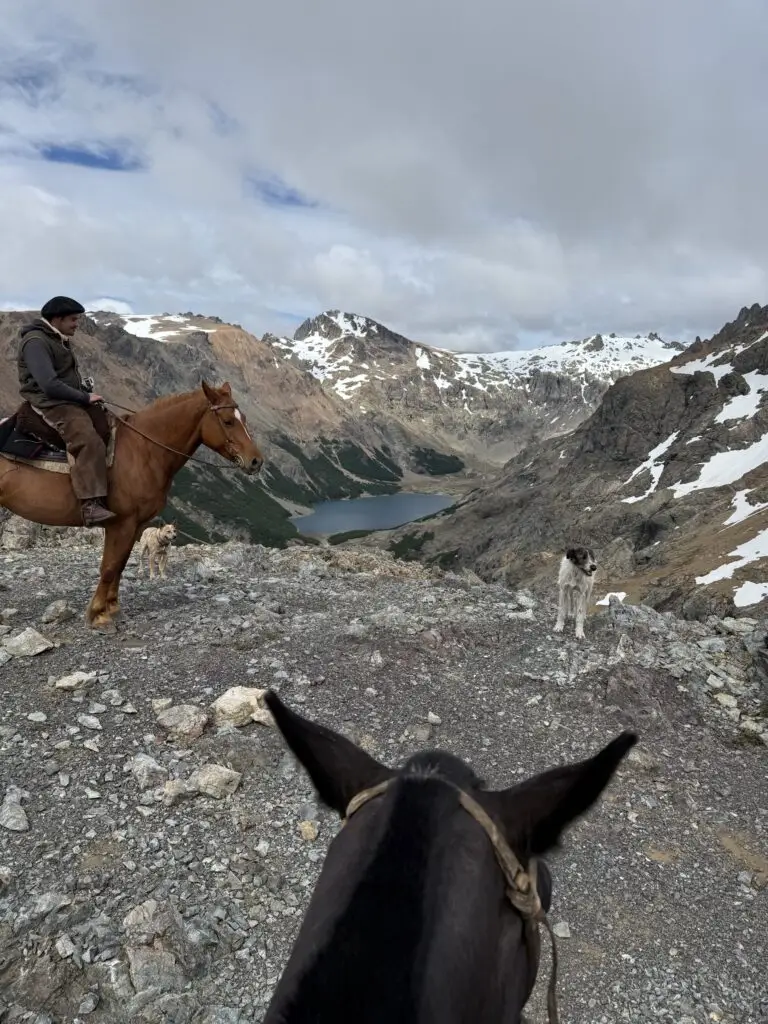
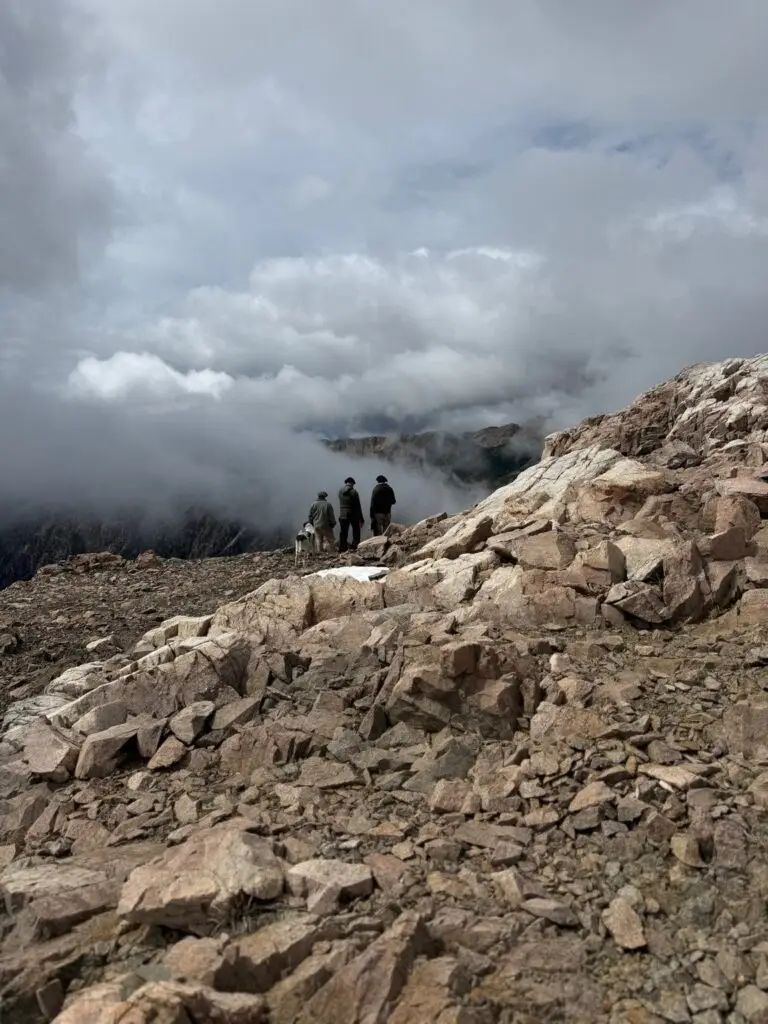
In any case, Thanksgiving Day proves to be the best day of my entire trip to Argentina. We get up early and set off on a ride. It’s cloudy and cool and the fog still hangs heavy high up in the mountains. We get so high up that the clouds are below us in some places. And the views are spectacular.
We ride to an overlook of a mountain range across the way. Far below, there is a lake in a valley surrounded by towering mountains. The lake is a shimmering indigo, and we’re told it has never been touched by people as there is no way to get to it. It’s like visiting a sacred site. I feel like there should be an offering or something.
At another overlook, we see a condor soaring between the mountains. Ivan tells us in their culture, seeing a condor is a visit from a departed loved one. I wish my Mom a Happy Thanksgiving.
We arrive back at the campsite and everyone kind of fans out. There’s a lot to process from the day’s ride and all the breathtaking beauty we beheld.
We all enjoy our final dinner together on the mountain. I try to memorize the picture in my mind just as it is because I want to remember this place for the rest of my life.
Going downhill is always harder than going up. I remember this from years of riding my sweet horse Shiloh through trails back home. And while mountains are obviously higher, you typically ascend and descend in segments. So it’s not that much different. What is different are the sections of trail where you are riding close to the side of a cliff, which is necessary but definitely not my favorite thing.
Up to this point, I am very proud of myself because I have handled the steep drop-offs and heights in general very well. But life has a way of not ever letting you get too comfortable or too proud of yourself. I am humbled a few times, and I get a little freaked out about the heights and all of the unpredictability associated with the adventure. But everything of course turns out fine.
Thankfully, Ivan is a saint. He is patient and kind and reassuring, and he’s super cool and funny in a dry wit sort of way. If I were him, I would have told me to knock it off, and probably in more colorful words. But he just remains calm and helps me along like it’s just another day at the office. His focus is always on our safety first, and then making sure we are enjoying the experience.
Our final river crossing may be the most beautiful. The sky is azure, and the light reflects off the water making it a twinkling starburst of aquas and blues. I try to soak it all in, but just in case, I capture it all on video.
Liza picks us up and we head back to the house. The first shower after three days of dust and dirt is glorious.
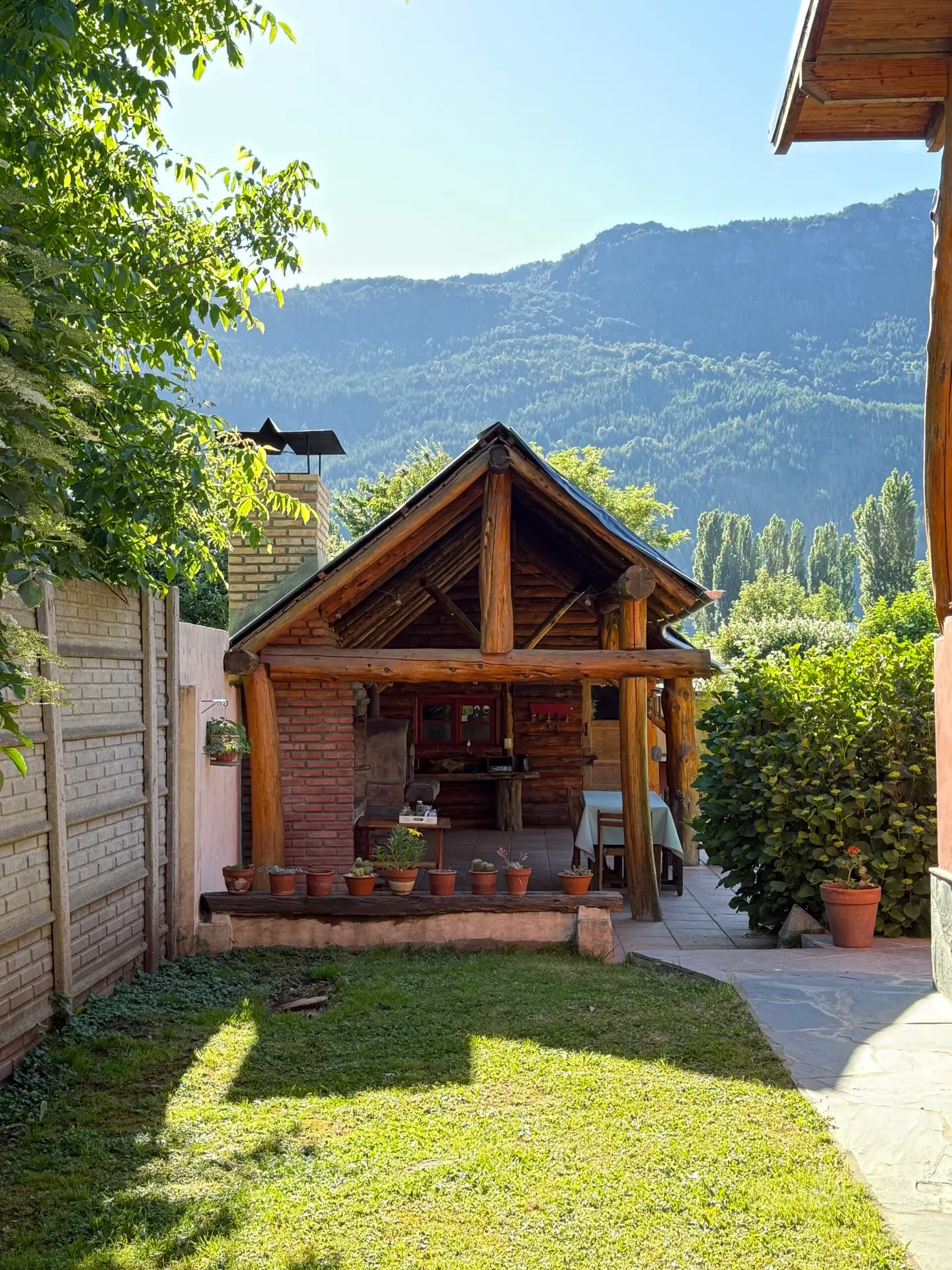
We all gather for dinner one final time. Liza makes the most amazing gourmet pizzas, four different kinds, and Ivan bakes them in their outdoor wood-burning oven. We recap the trip.
Marco is already talking about bringing his family back. Certainly, I would like to see this place and my new friends again someday. But I always knew the mountain part of the trip was probably a one-time deal for me. Some things you should just do once because the second time never lives up to the memory of the first. That’s been my experience, anyway.
It gets really cool outside and we hear the rumble of thunder. Where I’m from, big thunderstorms are common. I learn this is not the case here. It’s kind of a big deal. Soon, the thunder and lightning are here and with them comes a downpour. We are all thankful it holds off until after we are down the mountain.
One of the best parts of foreign travel are all the people you meet and get to know. That also makes it one of the hardest parts. I always like to leave a place believing I will be back. It makes leaving easier. That way, there are no goodbyes.
Twenty-five years ago, I went on a horseback riding adventure in Montana. I spent twelve days with some wonderful people, some of whom I became very close to. I haven’t seen any of them since. But I still believe I will.
We all have our ways of parting ways. This is mine. There are no goodbyes. Just good times, good memories, and a steadfast belief. If in another twenty-five years I don’t see any of these fine people again, I’ll still believe I will. And I sure hope I do.